
Introduction to Carbonara Recipe
Italian cuisine offers a delightful array of flavors, but few dishes resonate as deeply as carbonara. This classic pasta dish has captured hearts around the globe, and it’s easy to see why. Its creamy, rich sauce made from eggs and cheese, combined with the salty goodness of guanciale (or a substitute like turkey bacon), creates a comforting meal that can be made quickly and easily.
So, why is carbonara such a beloved dish? For starters, it’s incredibly versatile. While traditionalists advocate for using guanciale, alternatives like turkey bacon provide a lighter twist without sacrificing flavor. Additionally, the recipe is straightforward, making it accessible for home cooks at any level. Perfect for a cozy weeknight dinner or an impromptu get-together, the dish embraces a spirit of warmth and shared meals.
Moreover, the rich history behind carbonara adds to its charm; it’s thought to have originated among Italian charcoal workers, or carbonai, which is reflected in its name. Every bite of carbonara tells a story, making it more than just a meal—it's an experience. Curious to try your hand at this classic? Let’s dive into the ingredients and steps needed to create the perfect carbonara recipe.
For more on pasta cooking techniques, check out this guide for helpful tips!
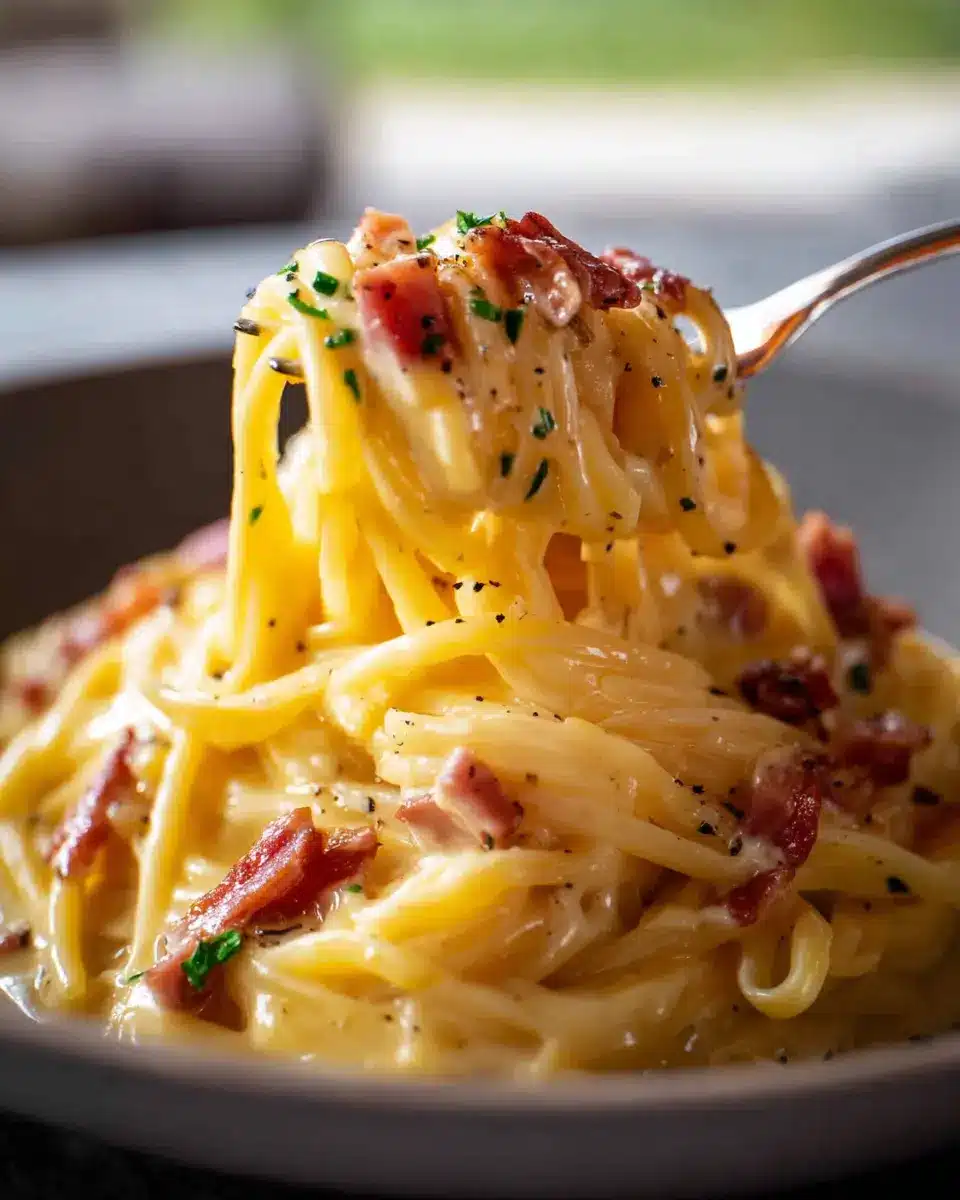
Ingredients for Carbonara Recipe
Essential ingredients for a classic carbonara
Creating a rich and creamy carbonara recipe is all about using the right ingredients. Here’s what you’ll need for this traditional Italian dish:
- Guanciale: 175g of guanciale is ideal for that authentic flavor. If you're unable to find it, consider using pancetta or block turkey bacon.
- Eggs: This recipe requires 2 large eggs and 2 egg yolks to achieve the perfect creamy sauce without any added cream.
- Cheese: 100g of finely shredded Parmigiano Reggiano (or substitute with Pecorino Romano) adds a savory depth.
- Black pepper: Just a sprinkle (¼ tsp) to enhance the dish’s flavor.
- Spaghetti: 400g of spaghetti serves as the perfect base for your sauce.
- Pasta cooking water: ½ cup of this is crucial for achieving the creamy texture.
Ingredient substitutions and alternatives
If you're looking for healthier or different options, here are some alternatives:
- For a leaner protein, switch guanciale with turkey bacon or chicken ham.
- In place of Parmigiano Reggiano, regular Parmesan will work in a pinch.
- If you're out of fresh garlic, a sprinkle of garlic powder can still add some flavor.
Remember, the essence of carbonara lies not in complicated ingredients but in quality. For more insights on eggs and their importance in cooking, check out this comprehensive guide on egg types. Happy cooking!
Step-by-step Preparation of Carbonara Recipe
Making a delightful carbonara is easier than you think and just as rewarding. Each step brings you closer to that creamy, flavorful bowl of pasta we all crave. Let’s dive into the process together!
Gather and prepare your ingredients
Before you start cooking, it’s essential to have everything ready. Here’s what you’ll need:
- Guanciale (or swap for turkey bacon)
- Large eggs and yolks
- Finely shredded Parmigiano Reggiano
- Black pepper
- Spaghetti
- Cooking/kosher salt
- Pasta cooking water (a crucial secret to that creamy sauce!)
- Optional: minced garlic for added flavor.
Take a moment to gather these ingredients and prepare them: slice the guanciale into batons and mince the garlic if you're using it.
Create the carbonara sauce
In a large mixing bowl, crack your eggs and add the yolks. Whisk them until they’re well combined, then stir in your finely shredded Parmigiano Reggiano and a generous pinch of black pepper. This will be the delicious, creamy base of your carbonara. For more information on selecting the right ingredients, check out this guide on best pasta types and ideal cheese choices.
Cook the pasta to perfection
In a large pot, bring about 4 liters (or 4 quarts) of water to a rolling boil, adding a tablespoon of cooking salt. Once boiling, add your spaghetti and follow the package instructions. For al dente pasta, it typically takes about 8-10 minutes, depending on the brand. Remember to reserve about half a cup of pasta cooking water just before draining.
Cook the guanciale (or substitute)
While your pasta is cooking, you can cook the guanciale. Heat a non-stick pan over medium-high heat and add your guanciale or turkey bacon. As it cooks for 4-5 minutes, it will render its fat, becoming crispy and fragrant. If using, add minced garlic in the last minute for a lovely aroma.
Combine pasta with the sauce
Once your pasta is drained, quickly transfer it to the pan with the guanciale, tossing it in the rendered fat. Pour the hot pasta into the mixing bowl with the egg mixture, adding half a cup of the reserved cooking water. Stir vigorously for about a minute until the sauce transforms from watery to creamy, perfectly coating each strand of spaghetti.
Serve and enjoy your carbonara
Serve your carbonara immediately in warm bowls. You can garnish with extra Parmigiano Reggiano, a sprinkle of black pepper, and finely chopped parsley if you like. The moment to savor is here: dig in and enjoy the rich, classic flavors of your homemade carbonara.
Exploring this classic dish not only fills your belly but also refines your cooking technique—bon appétit!
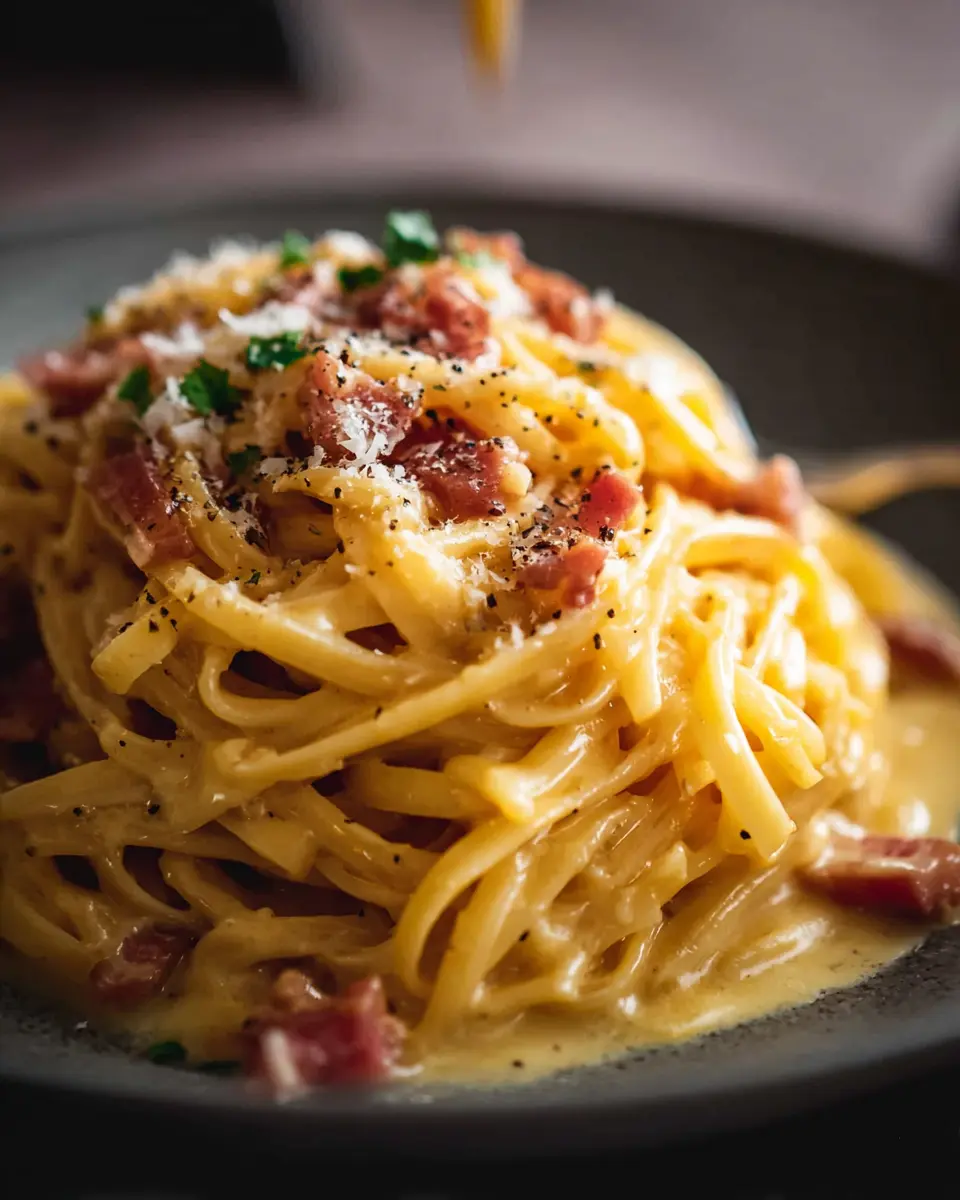
Variations on Carbonara Recipe
Chicken Ham Carbonara
For a twist on the classic recipe, try using chicken ham to give your carbonara a lighter, yet savory touch. Simply replace the traditional guanciale with sliced chicken ham, and enjoy the creamy sauce streaming through every bite. The preparation remains the same—just be sure to cook the chicken ham until it's slightly crispy to enhance the flavor. You could even add a sprinkle of smoked paprika to elevate the taste further.
Vegetarian Carbonara Options
Looking for a meat-free alternative? Vegetarian carbonara is a delightful option that doesn't skimp on taste. Instead of beef, consider using sautéed mushrooms or zucchini for a hearty texture. You can also incorporate ingredients like peas or spinach for added nutrition. To maintain the dish's richness, nutritional yeast can be a fantastic substitute for cheese, delivering a cheesy flavor without dairy. This can cater to those looking for a flavorful, plant-based carbonara recipe. For expert tips on how to perfect your vegetarian dish, check out this guide.
Cooking Tips and Notes for Carbonara Recipe
Key Techniques for a Creamy Sauce
To achieve that luscious, creamy sauce in your carbonara recipe, remember that temperature is key. Always mix the hot pasta directly into your egg and cheese mixture—this gentle heat cooks the eggs just enough to create a velvety sauce without scrambling them. A splash of reserved pasta water can help adjust the consistency, so don’t be afraid to use it!
Common Pitfalls to Avoid
One of the most common mistakes is adding cream. Authentic carbonara relies solely on eggs and cheese for its richness. Also, be cautious with the heat; adding the pasta too quickly can result in clumpy sauce. Finally, always use freshly grated cheese—pre-packaged types won't melt correctly, risking a gritty texture.
Serving Suggestions for Carbonara Recipe
Perfect sides to accompany carbonara
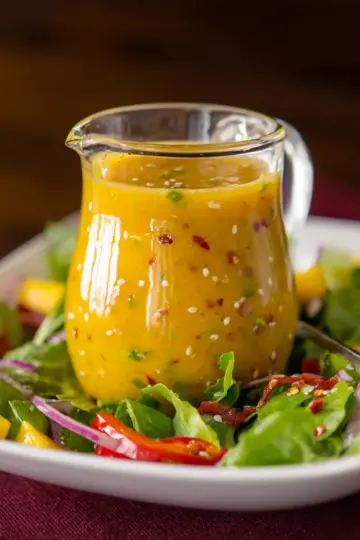
To elevate your carbonara recipe, consider pairing it with fresh and vibrant sides. Lightly sautéed greens, like spinach or broccolini, add a lovely contrast. A simple mixed salad with a lemon vinaigrette can also brighten up the dish. For a heartier option, garlic bread or a classic bruschetta works wonders too. Looking for something unique? A creamy mushroom risotto can beautifully complement the rich flavors of your carbonara.
Creative presentation ideas
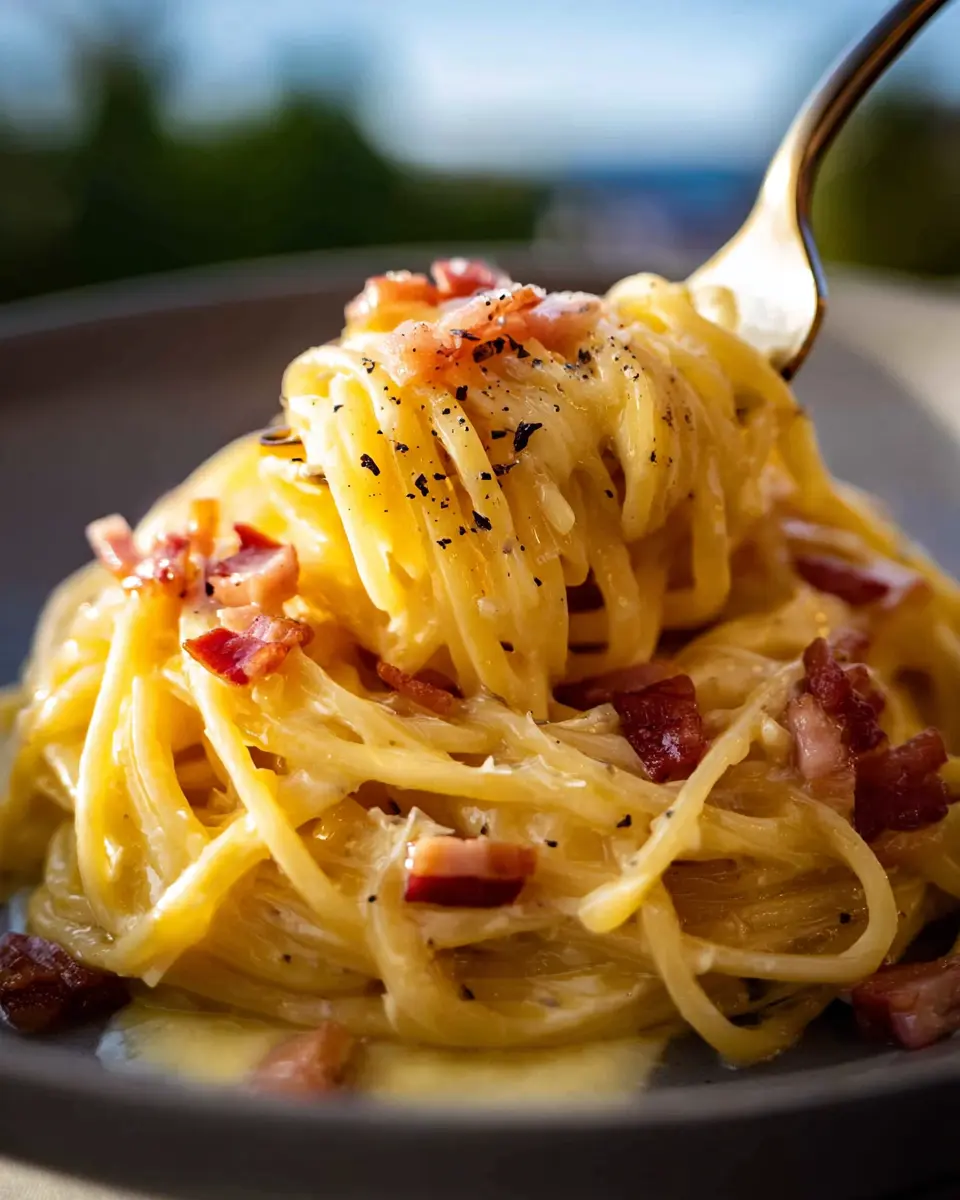
When plating your carbonara, presentation is key. Use warmed bowls to serve, and twirl the spaghetti into a neat nest using a fork or tongs. Sprinkle extra parmigiano reggiano and finely chopped parsley on top for a pop of color. For an added touch, you might place a small sprig of rosemary or basil on the side. This not only makes your carbonara look enticing but enhances the aroma too! For tips on plating finesse, check out this guide.
Time Breakdown for Carbonara Recipe
Preparation time
Getting everything ready for your carbonara recipe is quick and straightforward. Plan for about 10 minutes to chop your ingredients and whisk the eggs.
Cooking time
The actual cooking is efficient, taking around 15 minutes. This includes boiling the pasta and sautéing the guanciale (or turkey bacon).
Total time
In just 25 minutes, you can have a delicious, creamy carbonara on your table, perfect for a weeknight dinner or a fancy weekend meal!
Nutritional Facts for Carbonara Recipe
When indulging in this classic carbonara recipe, it's helpful to understand its nutritional profile:
Calories
A serving of this sumptuous carbonara contains approximately 500 calories, primarily from the pasta and rich ingredients. It's a hearty meal perfect for a cozy night in.
Protein Content
With a mix of guanciale (or turkey bacon), eggs, and parmigiano reggiano, one serving offers about 25 grams of protein. This makes it a satisfying dish for energy-fueled days.
Sodium Levels
Keep an eye on sodium intake; this dish has roughly 800 mg of sodium per serving, mostly sourced from the cheese and cured meat. Balance is key, especially if you're watching your sodium levels.
For more tips on maintaining a nutritional balance in your meals, check out the CDC's comprehensive nutrition overview.
FAQ about Carbonara Recipe
Can I use turkey bacon instead of guanciale?
Absolutely! While traditional carbonara recipes call for guanciale, turkey bacon can be a flavorful substitute. It will give you a leaner option, though the richness of the sauce may vary. Make sure to cook the turkey bacon until it's crisp to replicate that beautiful texture found in classic carbonara.
How do I store leftovers?
Leftover carbonara can be stored in an airtight container in the refrigerator for up to three days. However, fresh is always best, especially with this creamy dish! If you find you have leftover sauce, consider using it with another pasta dish the next day.
What's the best way to reheat carbonara?
To bring your carbonara back to its creamy glory, reheat it on the stovetop over low heat. Adding a splash of pasta cooking water helps recreate that luscious texture, ensuring it’s just as delightful as when first served.
For more tips, check out this detailed (Cooking Basics) guide on reheating pasta dishes!
Conclusion on Carbonara Recipe
Making your own carbonara at home is a culinary adventure that rewards you with rich flavors and a sense of accomplishment. The simplicity of the ingredients makes it accessible, while the techniques you learn can elevate your cooking skills. Trust me, once you try this carbonara recipe, you'll never want to order it out again!
Why You Should Try Making Carbonara at Home
Exploring the world of homemade carbonara offers several benefits that you might not have considered:
- Flavor Control: You have the power to adjust the flavors to your liking. Want more pepper? Go for it! Prefer a little extra cheese? Enjoy!
- Fresh Ingredients: Using high-quality ingredients ensures that every bite is bursting with flavor. Freshly cracked eggs and finely shredded cheese make a difference.
- Healthier Option: By making carbonara at home, you control the ingredients, making it easier to create a healthier dish that accommodates dietary preferences. Opt for turkey bacon instead of traditional guanciale for a leaner alternative.
Not convinced yet? Consider this: yummy customizable carbonara isn’t just an Italian classic; it’s a meal that brings friends and family together. The experience of cooking and sharing enhances the flavor, making it more than just food—it's a joyful occasion!
So, why not gather your ingredients and experience the satisfaction of preparing this delightful dish in your own kitchen? You'll impress yourself and anyone lucky enough to share the meal with you!
Carbonara
Equipment
- Non-stick pan
- Large Bowl
- Wooden spoon
Ingredients
Main Ingredients
- 175 g guanciale (or pancetta or block bacon) weight after skin removed
- 2 large eggs
- 2 large egg yolks
- 100 g parmigiano reggiano finely shredded (or pecorino romano, sub parmesan)
- 0.25 teaspoon black pepper
- 400 g spaghetti
- 1 tablespoon cooking/kosher salt for cooking pasta
- 0.5 cup pasta cooking water
- 1 clove garlic finely minced (optional)
Garnish (optional)
- parsley finely chopped
- parmigiano reggiano
Instructions
Cooking Steps
- Cut guanciale into 0.5cm / ⅕" thick slices then into batons.
- Place eggs and yolks in a large bowl. Whisk to combine. Stir in the parmesan and pepper.
- Bring 4 litres (4 quarts) of water to the boil with the salt. Add pasta and cook per the packet directions.
- Just before draining, scoop out 1 cup of pasta cooking water, then drain the pasta.
- While the pasta is cooking, place guanciale in a non-stick pan over medium high heat. Cook for 4 to 5 minutes until golden. If using garlic, add it in the last minute.
- Tip the hot pasta into the pan and toss to coat in guanciale fat.
- Transfer the pasta and any residual fat in the pan into the bowl with the egg. Add ½ cup (125 ml) pasta cooking water. Stir vigorously for 1 minute until the sauce transforms to creamy.
- Transfer into warm bowls. Serve immediately, garnished with extra parmigiano reggiano, black pepper, and parsley if desired.

Leave a Reply